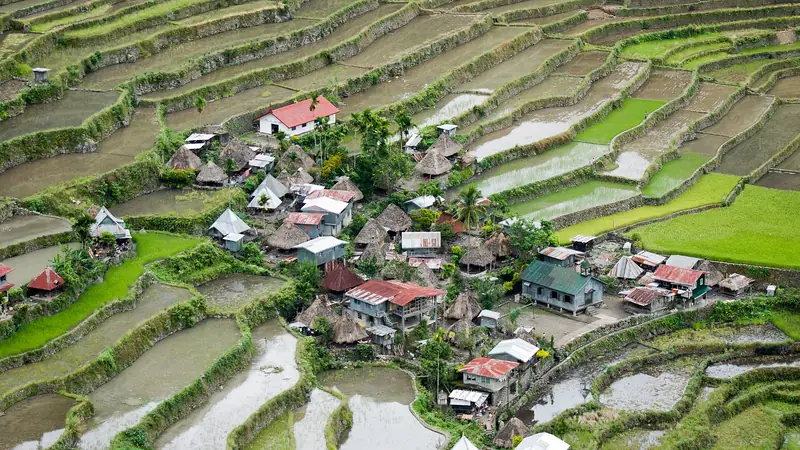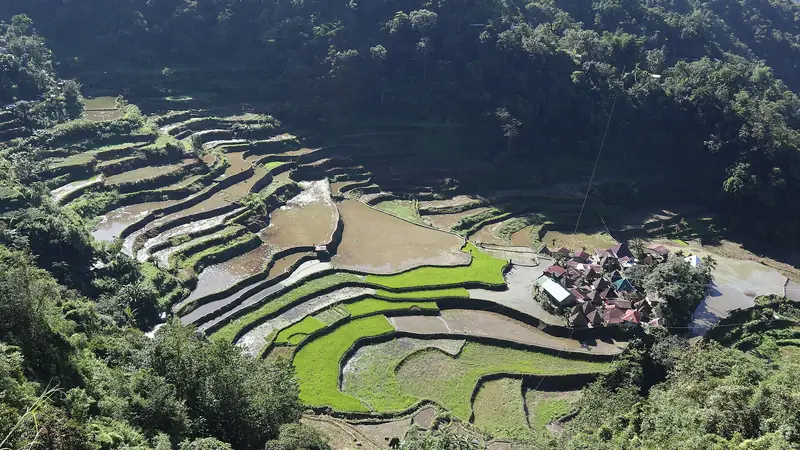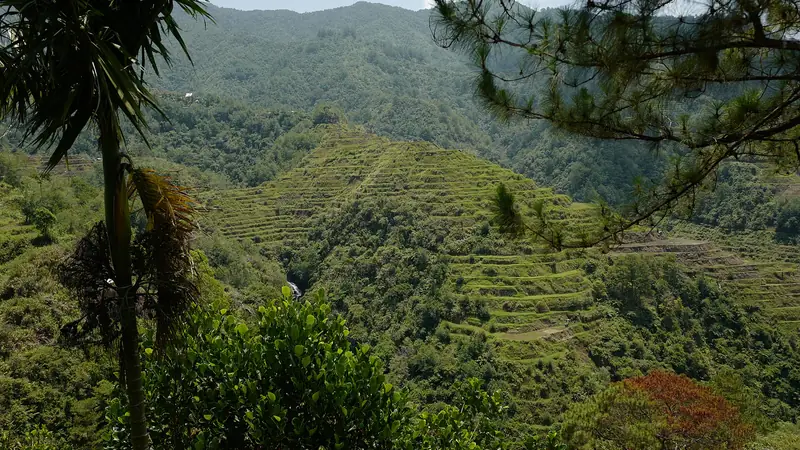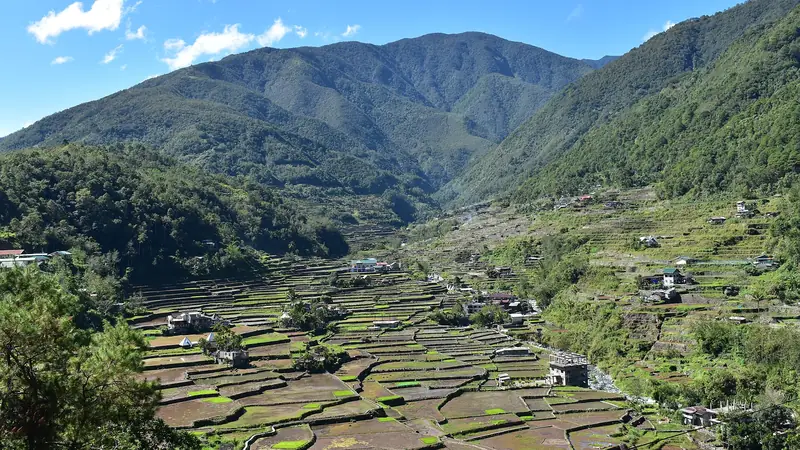
Banaue is the base for the whole region, and most of the province’s tourist accommodation is here (Wikivoyage). The town itself sits at 1,303 m (Wikipedia), so it is cooler than Manila by a good margin; see the best time to visit.
The main viewdeck
The classic view of the stepped fields is from the main viewdeck, which Wikivoyage lists as open 24 hours. It is the stop every tour makes, so early morning is the way to see it with fewer people; we found no source for crowd levels, so this is only common sense. A photographer on Wikimedia Commons shot the view you see at the top of this page from this viewpoint in November 2022.
The Welcome Arch and other stops
Wikivoyage also lists the Welcome Arch in Hingyon, free and open 24 hours, the Banaue Museum (7 AM to 4 PM, 50 pesos) and the Banaue Ethnic Village and Pine Forest Resort (50 pesos). It adds that the Museum of Cordilleran Sculpture was temporarily closed as of September 2023, so check before you go out of your way.
The environmental fee
Wikivoyage says an environmental fee of 50 pesos is paid at the Municipal Tourism Office on arrival, and the same fee shows up on the Batad page, where it is paid at a booth on the way down. Tours may or may not include it; ask your operator. The amount and the place to pay can change, so confirm at the office.
What these terraces are, and are not
The terraces around Banaue town are often called a World Heritage Site, but Wikipedia says they were left out of the UNESCO listing because of modern structures and that the listed clusters are Batad, Bangaan, Hungduan, Mayoyao Central and Nagacadan. We explain this on the UNESCO page. The terraces are fed by irrigation from the rainforest above and held by stone and rammed-earth walls, according to the same article.
Beyond the viewdeck
The view from the deck is a start, not the whole experience. For the amphitheatre of Batad you need to walk: see Batad. For Bangaan and the Hapao terraces near Hungduan, see the other terraces. If you need a bed, read where to stay.
Frequently asked questions
Where can I see the Banaue rice terraces from?
Wikivoyage lists the main viewdeck and the Welcome Arch in Hingyon, both open 24 hours; the viewdeck listing carries no fee and the arch is free. The terraces are also visible from the road around town.
Is there an entrance fee for Banaue?
Wikivoyage says an environmental fee of 50 pesos is paid at the Municipal Tourism Office on arrival. Other sights, such as the museum, charge their own entry.
How high is Banaue?
Wikipedia gives the town's elevation as 1,303 m. The Banaue Rice Terraces article gives the terraces as approximately 1,500 m above sea level.
Some links are affiliate links: if you book through them we earn a small commission at no extra cost to you. It funds the research behind this site.